Launch offer — valid today only

📄 Digital book in PDF · read it on your phone or print it

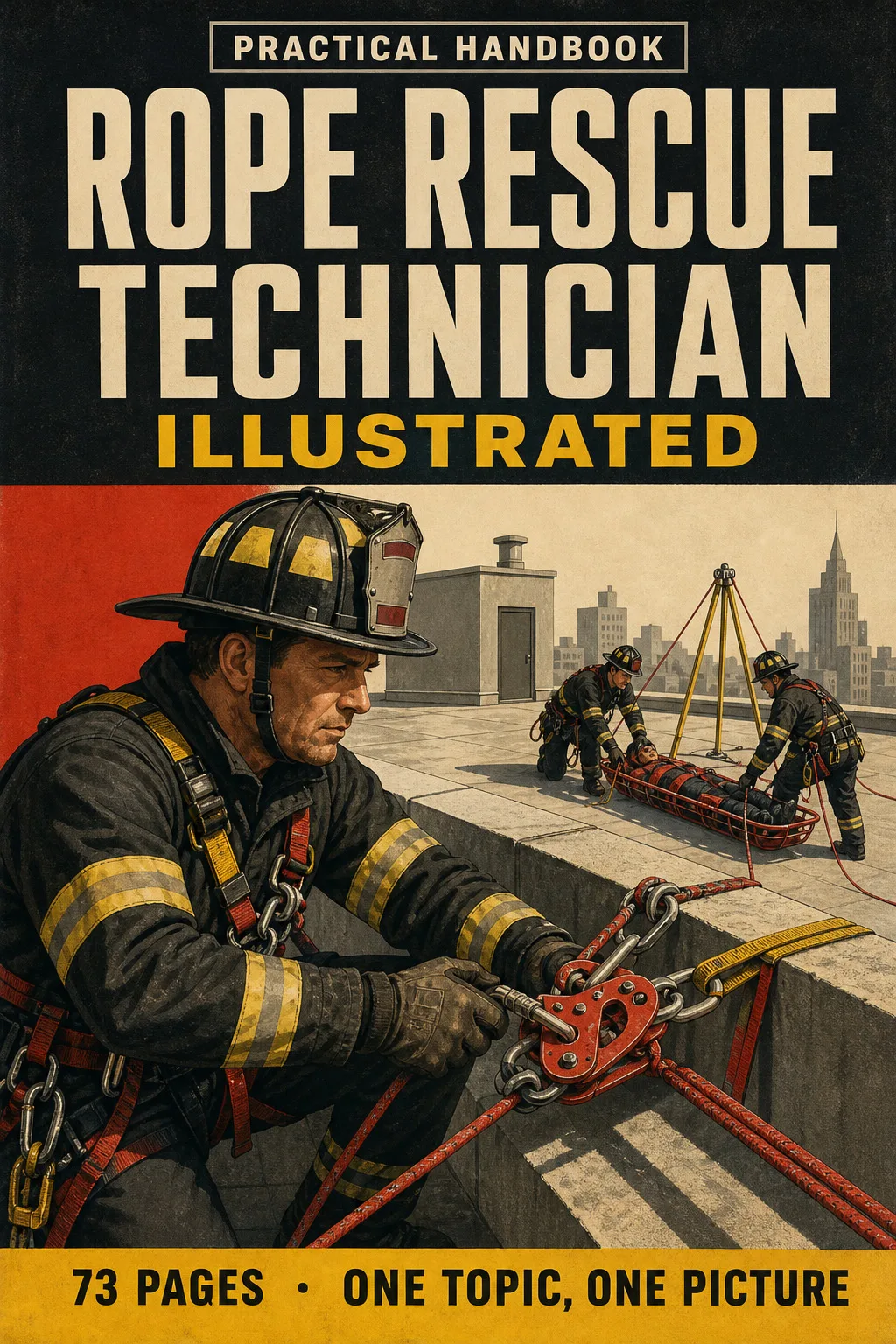
Rope Rescue Technician Illustrated: NFPA 1006 in Drawings Every System in the Same Order

Knots and the knot check, anchors and angle forces, belay and lowering, the tension method, 3:1 to compound 9:1, edge protection, litter rigging and changeovers. Every topic gets its own page: the drawing first, then what you need to remember. 73 illustrated pages.

START STUDYING THIS WAY

🔒 Secure checkout · PDF by email · 30-day guarantee

Every topic, its own pageEach knot, anchor and haul system drawn, with the explanation right beside it
73 illustrated pages9 parts, from "one rescue, one order" to your practical evaluation
Up-to-date sourcesNFPA 1006 (current edition) and NFPA 2500, formerly NFPA 1983
PDF by emailFormat

Look Inside the Book

Every page has one big drawing and a box with the numbers, steps and checks you need to know:

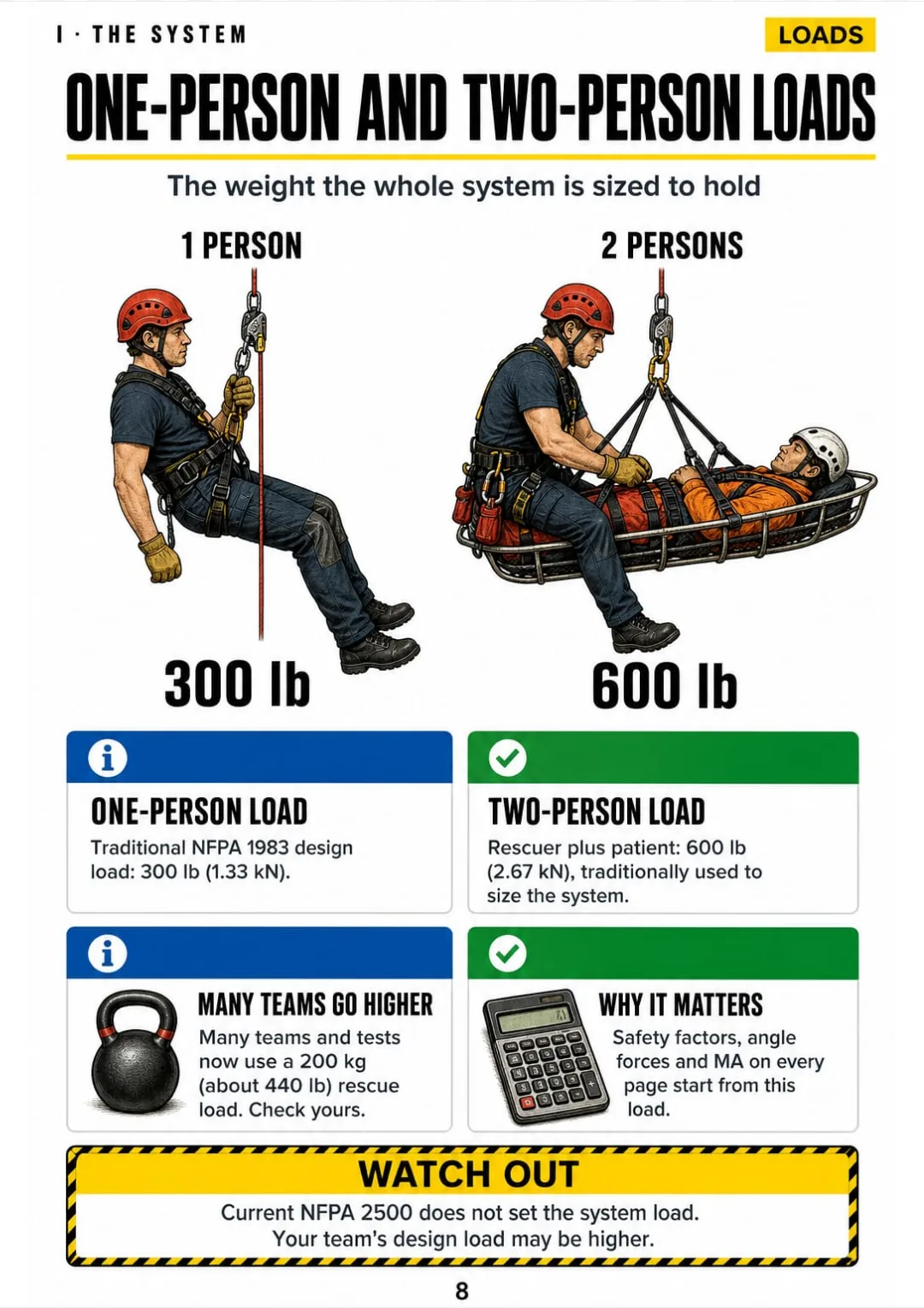
Traditionally 300 lb for one person, 600 lb for rescuer + patient
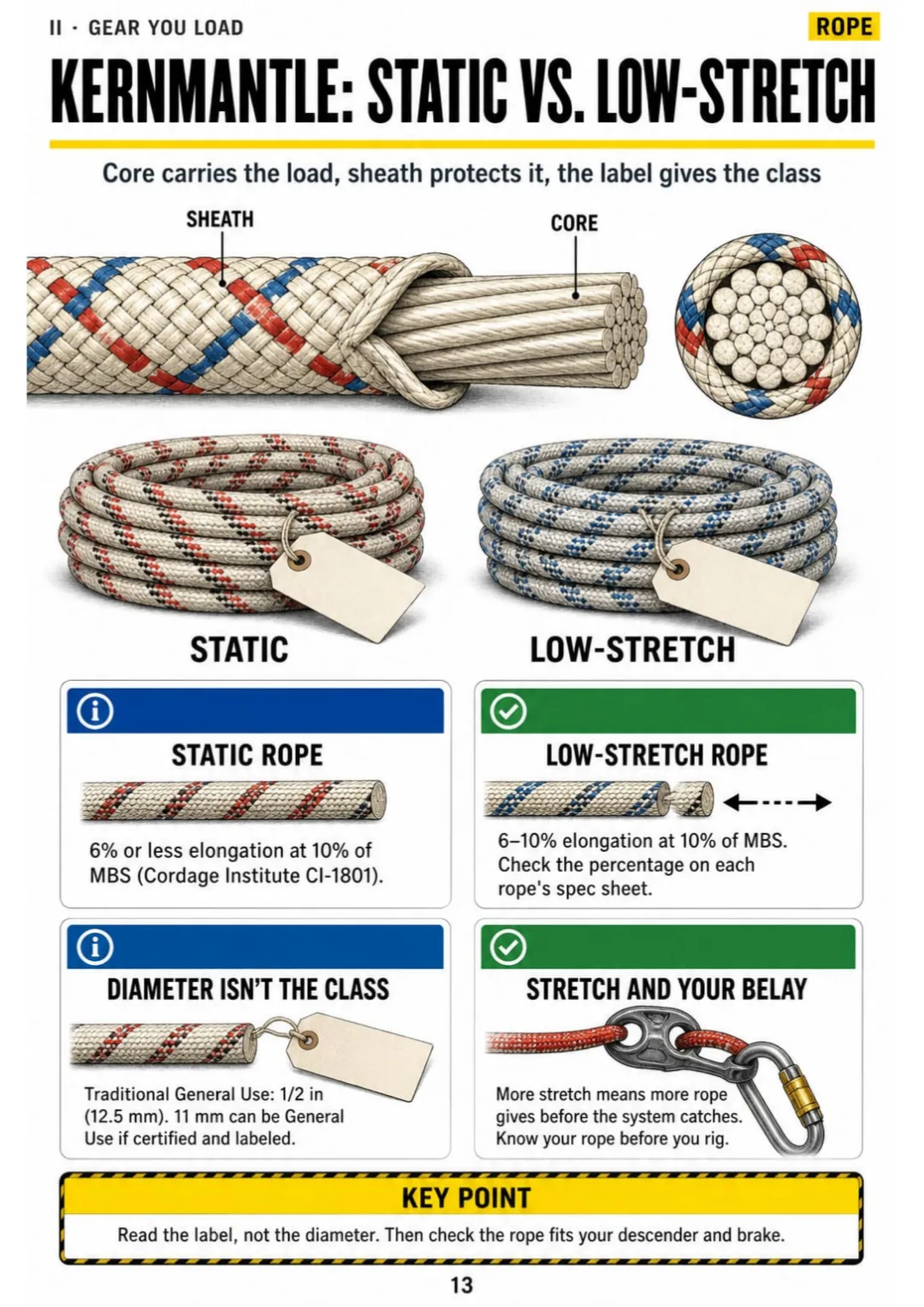
Static 6% or less, low-stretch 6–10% elongation at 10% of MBS, drawn in cross-section.
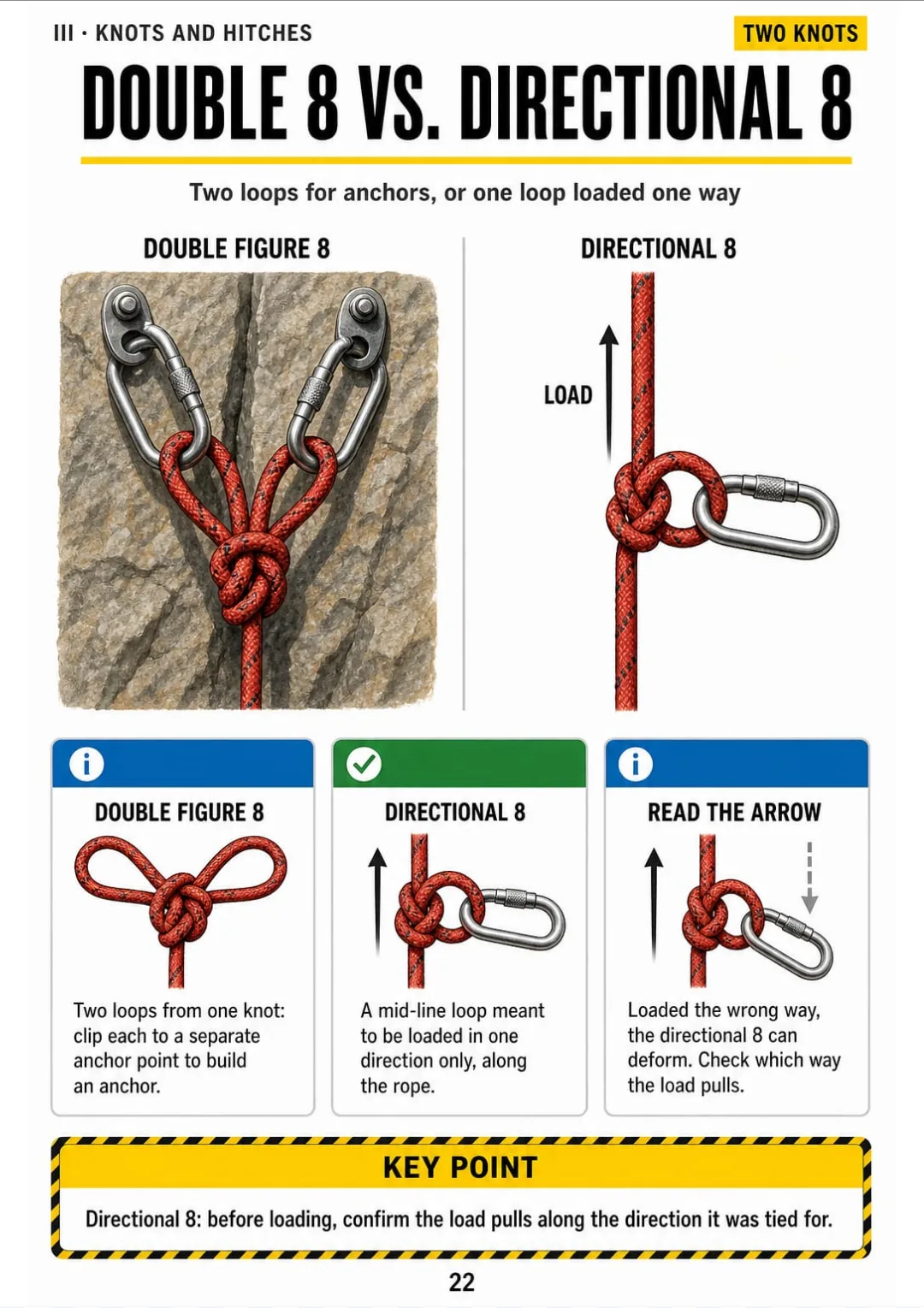
Double figure 8 for two anchor points vs. directional 8 loaded in one direction only
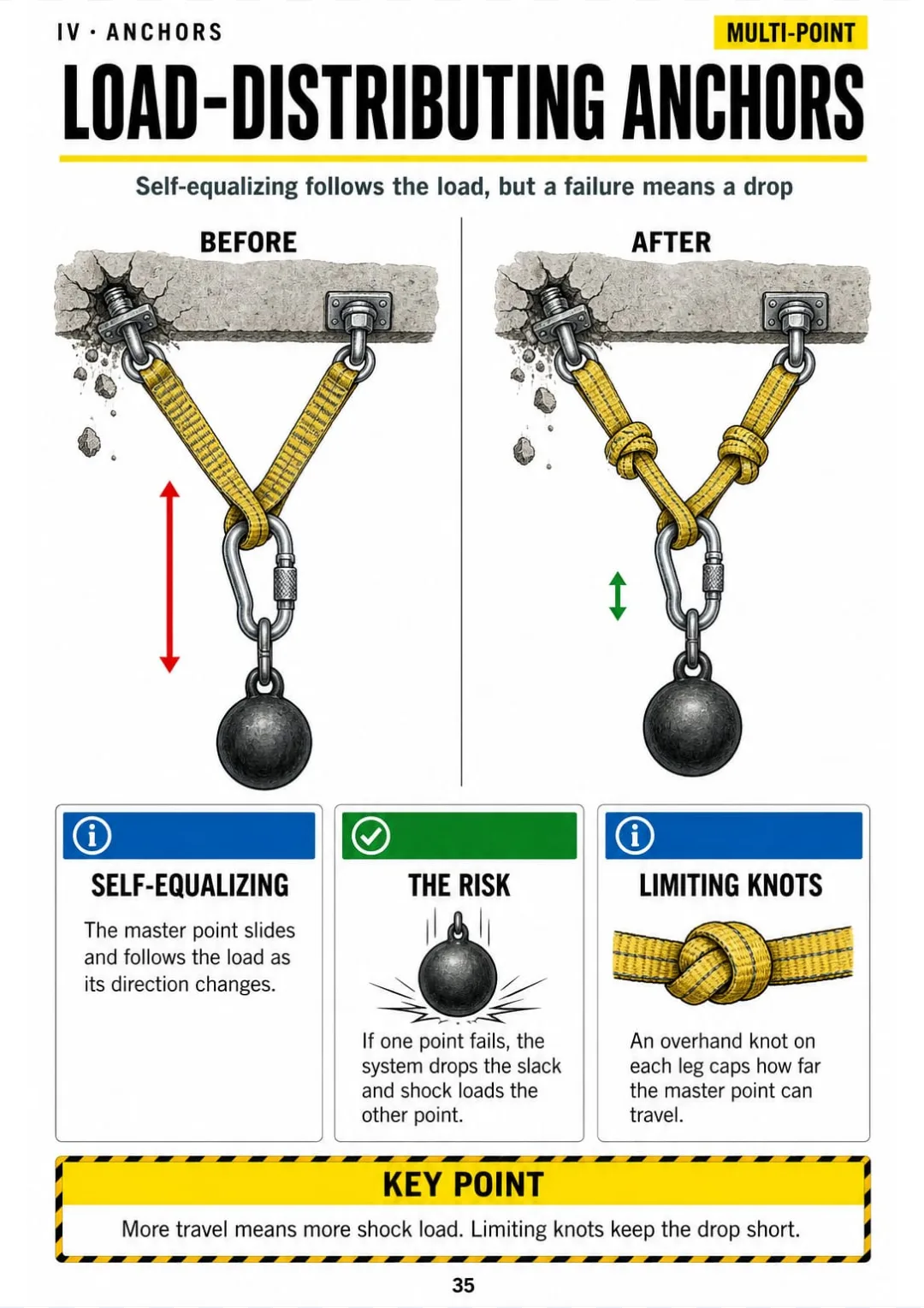
Self-equalizing anchor before and after limiting knots: the drop shrinks
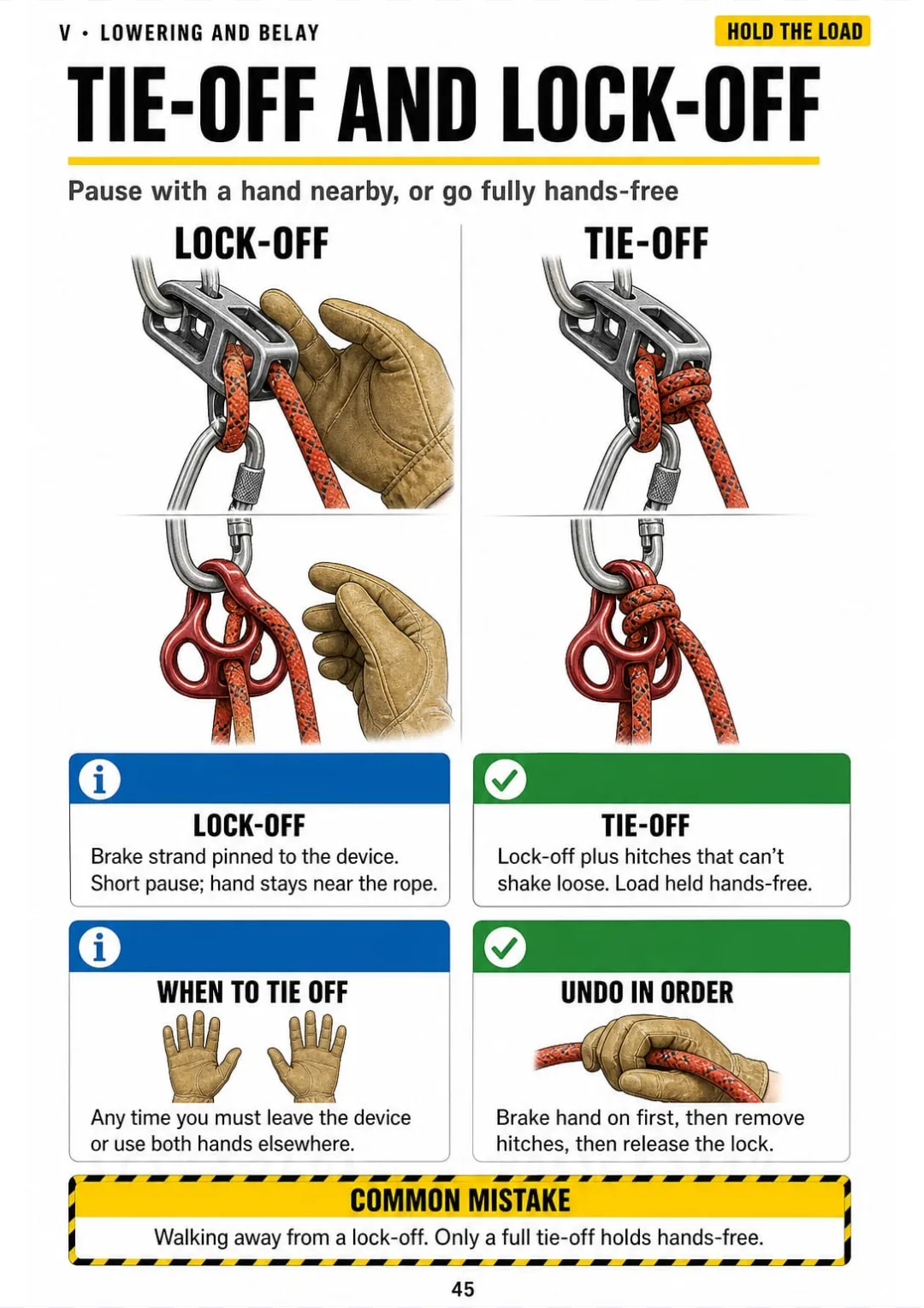
Lock-off vs. tie-off on a rack and a figure 8: when each one holds the load
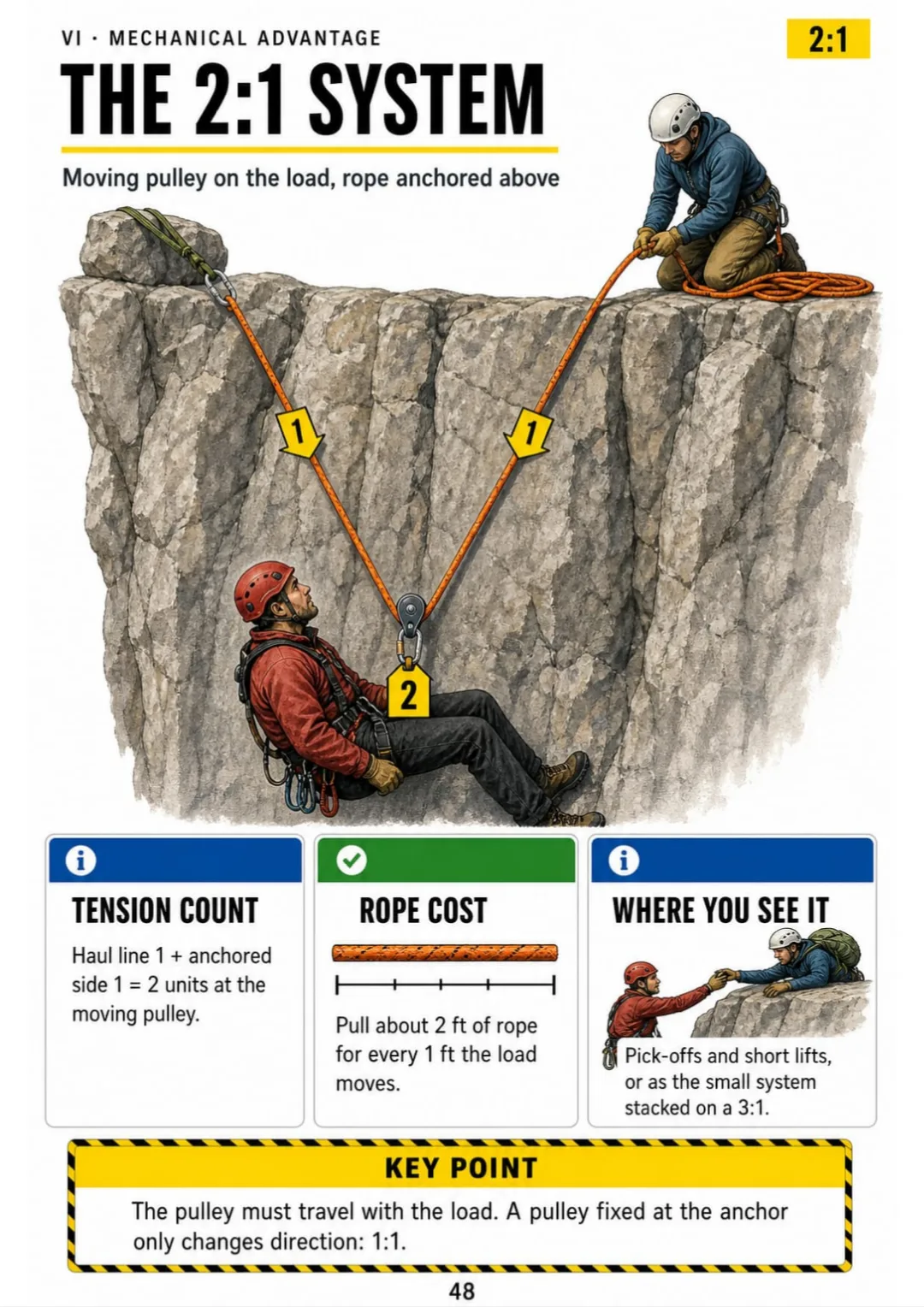
2:1: moving pulley on the load, rope anchored above, 1 + 1 = 2
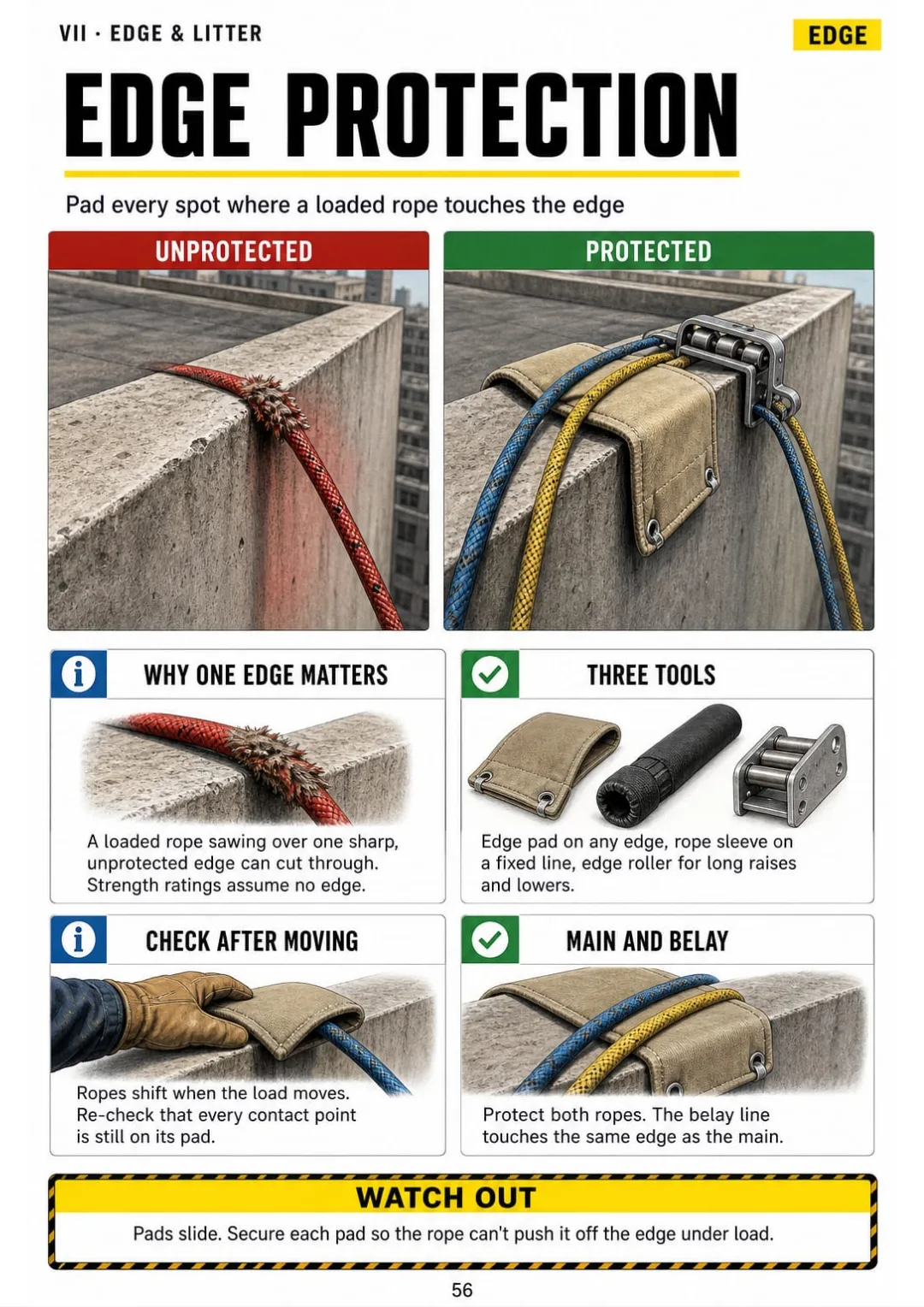
Edge pad, rope sleeve or roller at every point where the rope touches the edge.
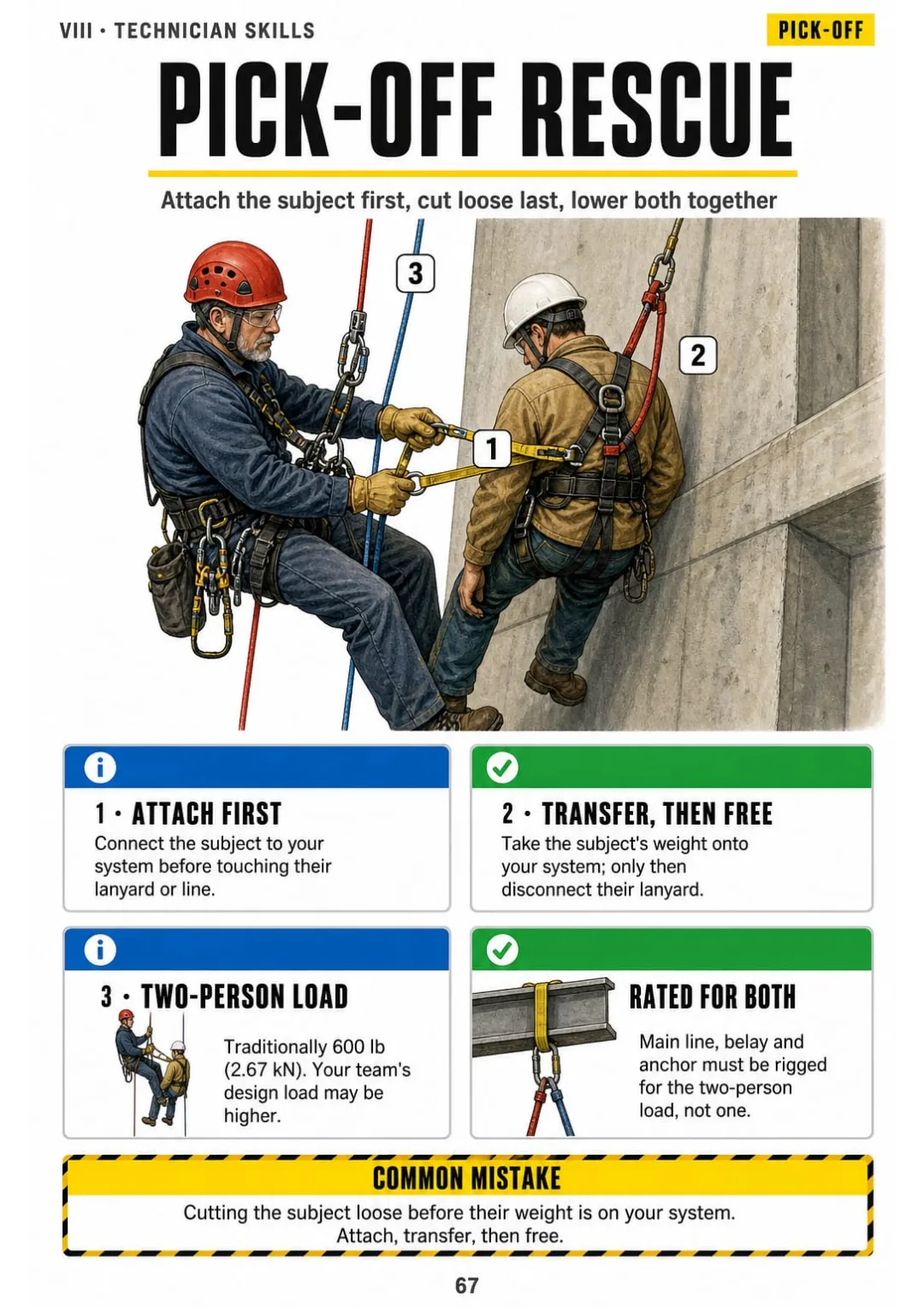
Pick-off: attach first, transfer, free last, lower a two-person load

Swipe to see more →

These are real pages from the book. The table of contents is the full one: 9 parts and 68 topics.

The Problem Isn't You. It's How It Was Explained to You.

The instructor points at your two-point anchor and asks how much each leg is carrying. The crew goes quiet.

You've seen the angle chart before. The manual hands it to you as a table, squeezed between strength ratings and rope care, so with the crew watching, the numbers blur.

Double figure 8 for two anchor points vs. directional 8 loaded in one direction only

In this book the angle rule takes one page: the same anchor drawn at 60°, 90° and 120°, with the load on each leg marked (about 58%, 71% and 100%).

Everything else works the same way. The tension method, the 3:1 Z-rig, the compound 9:1, the knot check: each one has its own page.

So you look at the angle, say the number and why. You answer from the drawing, not from a table you half remember.

COMPARE FOR YOURSELF

Same Topic, Two Ways to Study It

THIS
  • The manual: line after line
  • Rope types explained with words only
  • You show up to the evaluation still unsure
Kernmantle rope consists of a load-bearing core (kern) enclosed within a protective woven sheath (mantle). Life safety ropes are commonly classified according to their elongation characteristics, measured at a specified percentage of minimum breaking strength. Static ropes typically exhibit elongation of 6 percent or less at 10 percent of MBS, whereas low-stretch ropes exhibit elongation greater than 6 percent and up to 10 percent under the same test conditions. Rope selection should account for system application, anticipated loading, abrasion resistance and the requirements of the authority having jurisdiction.
FOR THIS
  • Static and low-stretch in one cross-section
  • The elongation numbers in a box
  • You see it and you get it
Static 6% or less, low-stretch 6–10% elongation at 10% of MBS, drawn in cross-section.
CONTENTS

Take a Look at the 9 Parts and 68 Topics

The system before the rope, the gear you load, knots, anchors, lowering and belay, mechanical advantage, edge and litter, Technician skills and a final review: 73 pages, all illustrated.

IThe System Before the Rope · pp. 6-12
  1. One Rescue, One Order
  2. Operations vs. Technician in NFPA 1006
  3. Design Loads: One-Person and Two-Person
  4. Static System Safety Factor
  5. kN and lbf in Your Head
  6. General Use vs. Technical Use
  7. Size-Up and Scene Safety
IIGear You Load · pp. 13-18
  1. Kernmantle Rope: Static vs. Low-Stretch
  2. Rope Inspection and Retirement
  3. Carabiners: Load the Major Axis
  4. Pulleys and the 4:1 Sheave Rule
  5. Webbing, Slings and Anchor Straps
  6. Harness Classes and Rescuer PPE
IIIKnots and Hitches · pp. 19-28
  1. Dressed, Set, Tail: The Knot Check
  2. Figure 8 on a Bight
  3. Figure 8 Follow-Through
  4. Double Figure 8 and Directional 8
  5. Bowline with a Safety
  6. Double Fisherman's
  7. Water Knot in Webbing
  8. Prusik Hitch: 3 Wraps
  9. Munter Hitch
  10. Radium Release Hitch
IVAnchors and Angle Forces · pp. 29-37
  1. Choosing an Anchor
  2. Tensionless Anchor: 4 Wraps
  3. Wrap 3, Pull 2
  4. Basket and Girth Hitches
  5. The Angle Rule: Load per Leg
  6. Load-Sharing Anchors
  7. Load-Distributing Anchors
  8. Back-Tying an Anchor
  9. Redirect Forces
VLowering and Belay · pp. 38-45
  1. Main Line and Belay Line
  2. Brake Bar Rack
  3. Figure 8 Descender with Ears
  4. Mechanical Descent Control Devices
  5. Tandem Prusik Belay
  6. The Whistle Test, Drawn
  7. Lowering System Check
  8. Tie-Off and Lock-Off
VIMechanical Advantage · pp. 46-55
  1. The Tension Method: Count Units
  2. Simple vs. Compound vs. Complex
  3. 2:1 System
  4. 3:1 Z-Rig
  5. Progress Capture
  6. Ideal vs. Actual MA
  7. 6:1 Compound: 2:1 on a 3:1
  8. 9:1 Compound: 3:1 on a 3:1
  9. 5:1 Complex
  10. Too Much MA: Feeling the Load
VIIEdge, Litter and Patient · pp. 56-63
  1. Edge Protection
  2. Raising the Anchor: High Directionals
  3. The Edge Transition
  4. Packaging the Patient in a Litter
  5. Horizontal Litter Rigging
  6. Vertical Litter Rigging
  7. The Litter Tender
  8. Rope Commands in Order
VIIITechnician Skills · pp. 64-68
  1. Lower-to-Raise Changeover
  2. Raise-to-Lower Changeover
  3. Passing a Knot
  4. Pick-Off Rescue
  5. Highline Basics
IXReview Before Your Evaluation · pp. 69-73
  1. The Whole System on One Page
  2. Pre-Load Check Sequence
  3. Force Math Cheat Sheet
  4. Most Common Rigging Mistakes
  5. Practical Evaluation: How It Runs

One Page, One Topic, All Clear

Think of it this way:

It's the night before your practical evaluation. You know the evaluator will point at your haul system and ask what the MA is and how you got there.

You've seen that page. You picture the tension method drawing: 1 unit on the haul line, more added at each traveling pulley, and the total at the load is your ideal MA. You count it out loud, pulley by pulley.

Lock-off vs. tie-off on a rack and a figure 8: when each one holds the load

Same with the 4-wrap tensionless anchor, the brake bar rack, the compound 9:1, edge protection and vertical litter rigging: each one on its own page.

Rope Rescue Technician Illustrated is 9 parts and 68 topics, all drawn, and it ends with a pre-load check sequence, a force math cheat sheet and the most common rigging mistakes.

What you see drawn, you don't have to memorize.

What's Inside Rope Rescue Technician Illustrated:

Ipp. 6-12

The System Before the Rope

The one rescue order, Operations vs. Technician in NFPA 1006, one- and two-person design loads, the static safety factor, kN and lbf, general vs. technical use and size-up.

IIpp. 13-18

Gear You Load

Static and low-stretch kernmantle, rope inspection and retirement, carabiners on the major axis, pulleys and the 4:1 sheave rule, webbing and anchor straps, harnesses and PPE.

IIIpp. 19-28

Knots and Hitches

The knot check, the figure 8 family, the bowline with a safety, double fisherman's, water knot, the 3-wrap prusik, the Munter and the radium release hitch.

IVpp. 29-37

Anchors and Angle Forces

Choosing an anchor, the 4-wrap tensionless, wrap 3 pull 2, basket and girth hitches, the angle rule, load-sharing and load-distributing anchors, back-ties and redirects.

Vpp. 38-45

Lowering and Belay

Main line and belay line, the brake bar rack, the figure 8 with ears, mechanical descent control devices, the tandem prusik belay, the whistle test, the lowering check and tie-offs.

VIpp. 46-55

Mechanical Advantage

The tension method, simple vs. compound vs. complex, 2:1, the 3:1 Z-rig, progress capture, ideal vs. actual MA, 6:1 and 9:1 compounds, the 5:1 complex and too much MA.

VIIpp. 56-63

Edge, Litter and Patient

Edge protection, high directionals, the edge transition, packaging the patient, horizontal and vertical litter rigging, the litter tender and rope commands in order.

VIIIpp. 64-68

Technician Skills

Lower-to-raise and raise-to-lower changeovers, passing a knot, the pick-off rescue and highline basics.

IXpp. 69-73

Review Before Your Evaluation

The whole system on one page, the pre-load check sequence, a force math cheat sheet, the most common rigging mistakes and how a practical evaluation runs.

At the end of the book: The whole system on one page, a pre-load check sequence and a force math cheat sheet.
Plus: 2 Free Books

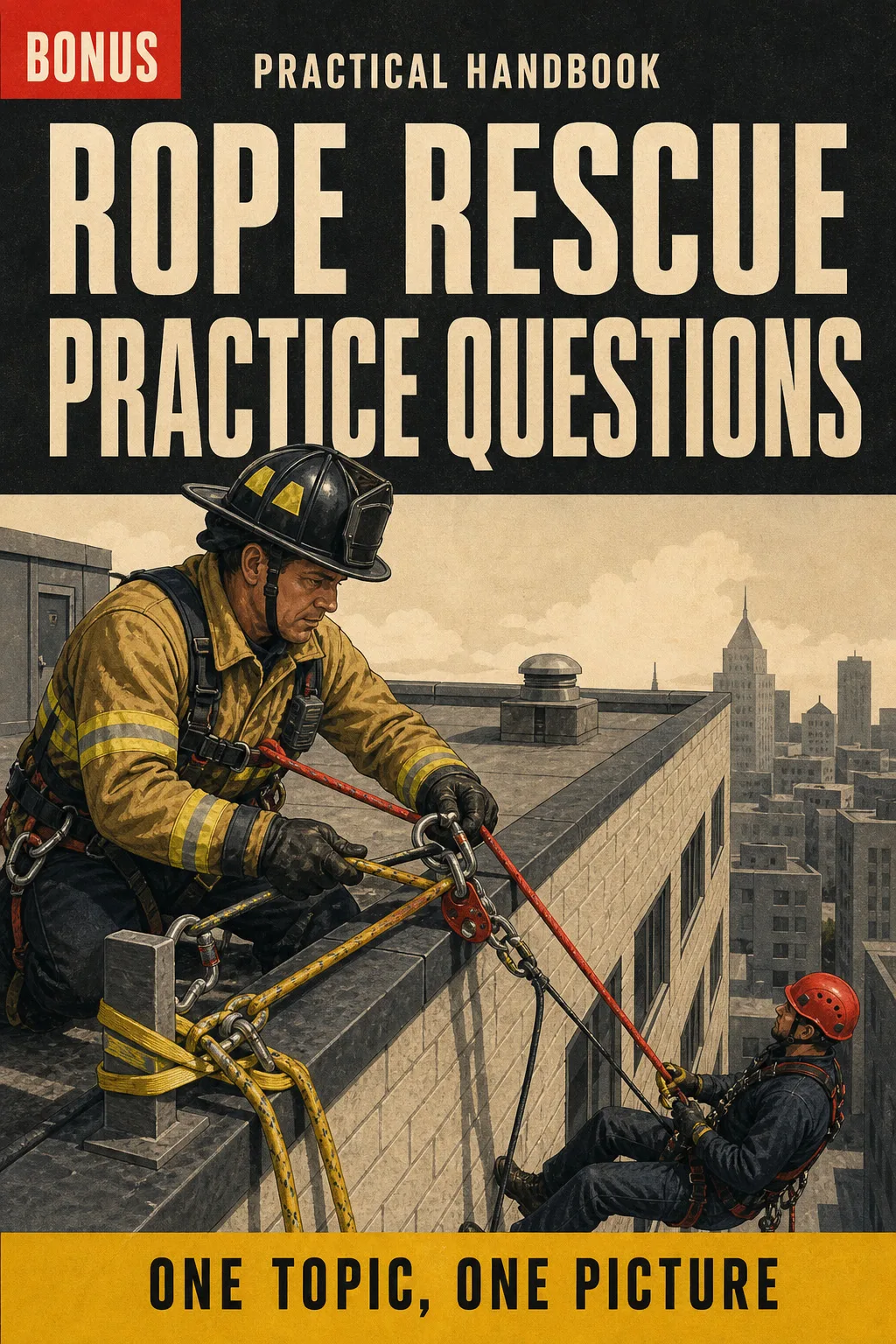
Rope Rescue Practice Questions

BONUS 1: «Rope Rescue Practice Questions»

Value on its own: US$ 17.90

Exam-style questions with the answer explained, so you find out what you really know before the instructor asks.

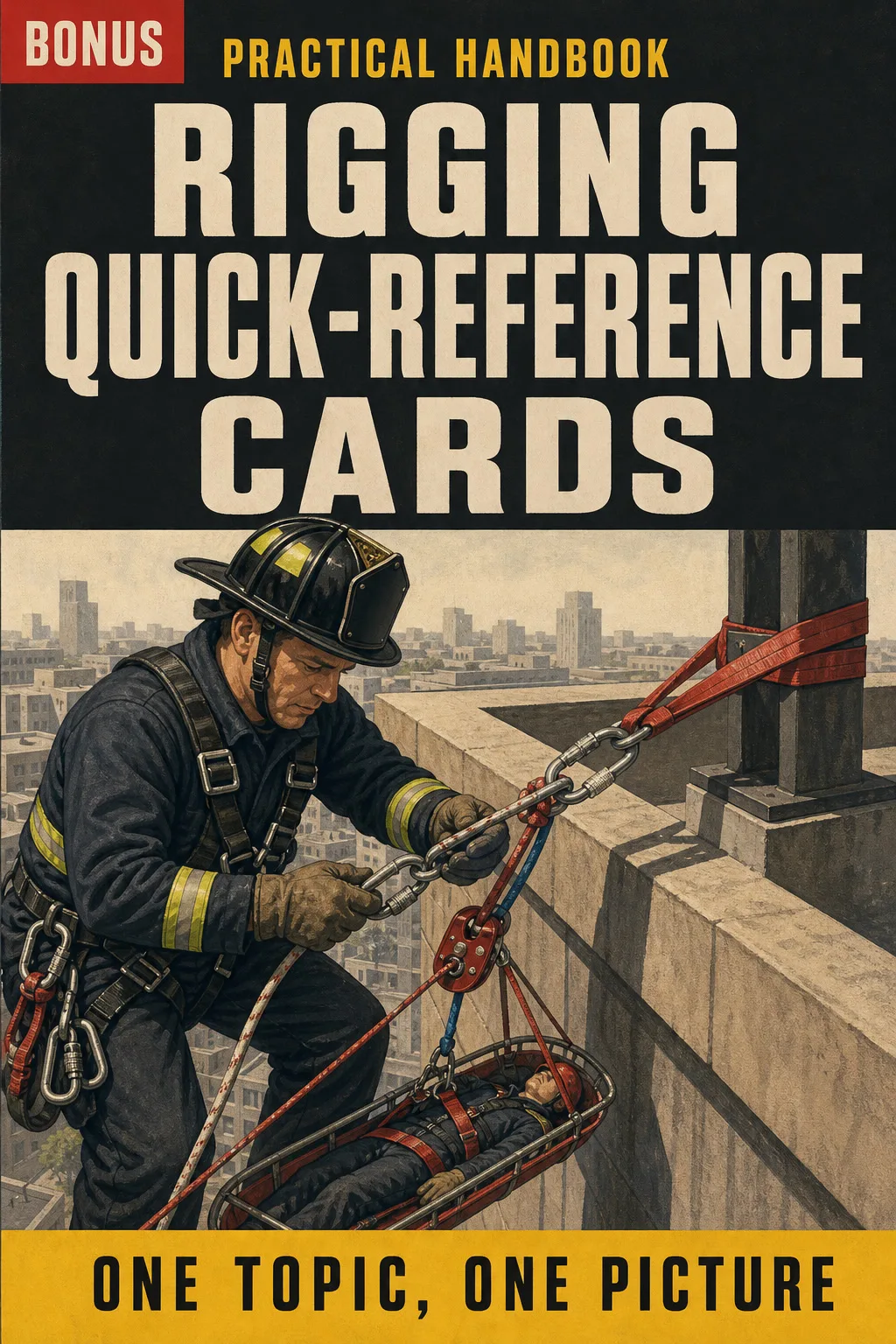
Rigging Quick-Reference Cards

BONUS 2: «Rigging Quick-Reference Cards»

Value on its own: US$ 14.90

Knots, MA ratios, anchor angles and rope commands on printable cards, so you can review the whole system at a glance before a drill.

Rope Rescue Technician Illustrated with 2 Free Books

  • Rope Rescue Technician Illustrated: 73 illustrated pagesUS$ 63
  • BONUS 1: Rope Rescue Practice QuestionsUS$ 17.90
  • BONUS 2: Rigging Quick-Reference CardsUS$ 14.90
  • High-resolution PDF to printIncluded
Total value US$ 95.80
YOUR PRICE:
US$ 27
You save US$ 68.80
YES, I WANT ROPE RESCUE TECHNICIAN ILLUSTRATED FOR US$ 27

📄 This is a digital PDF book sent to your email: nothing is printed or shipped.

Secure purchaseEncrypted payment30-day guarantee

PDF by email: We email you Rope Rescue Technician Illustrated as a PDF, together with the two free books. It's a single payment: no installments, no extra charges.

Who This Book Is For

You're in the Operations course

You're in the Operations course

Each knot, anchor and lowering system has its own page, so you review between shifts what you rigged at the tower.

Your Technician evaluation is close

Your Technician evaluation is close

The tension method, the 9:1 compound and the changeovers are drawn step by step, so you can explain the math out loud instead of guessing.

You're back on the rope after years away

You're back on the rope after years away

The whole system in the same order, anchor to commands, so it comes back fast before your first drill.

Everything You Get Today

US$ 95.80US$ 27
YES, I WANT ROPE RESCUE TECHNICIAN ILLUSTRATED FOR US$ 27

📄 This is a digital PDF book sent to your email: nothing is printed or shipped.

30DAYS
GUARANTEE

30-Day Guarantee

Try Rope Rescue Technician Illustrated for 30 days, bonus books included.

We refund everything if the file won't open, if the book isn't what you see here, if you were charged twice or if the email doesn't arrive. Just email us.

You pay once. No subscriptions.

Frequently Asked Questions

Is it for me if I've been on the job for years and I'm going for Operations or Technician?

Yes. It covers both levels, Operations and Technician. It doesn't teach you to tie a figure 8 from scratch: it goes to what's hard to hold in your head, like angle forces, the tension method, compound MA and changeovers, so you can review fast between shifts.

Does it work for my state's course, or is it generic?

It's built on the current edition of NFPA 1006 (rope rescue chapter), the standard state rope rescue courses are based on, and cross-checked against NFPA 2500 (formerly NFPA 1983) for rope and equipment. Each state runs its own program, so values that can vary are flagged to check against your state program and AHJ.

Is this official material?

No. It's an independent study book. It doesn't give a certificate or CE hours, and it isn't affiliated with or endorsed by the NFPA, your state or any certifying body.

Does it replace my rope rescue course?

No. It's for review between drills. It doesn't replace hands-on training with a qualified instructor or your department's procedures, and it doesn't guarantee you'll pass your certification.

Are the practice questions the ones on the exam?

No. They're written for this book to help you check what you know. They aren't official questions from any exam.

When and how do I get it?

The book and the 2 bonus books come as PDFs by email, to the address you enter at checkout.

Do I have to pay every month?

No. It's a one-time payment.

Can I get it on paper?

It's a PDF you can print. Print the pages you use most and keep them at the station.

How does the refund work?

You have 30 days. We refund everything if the file won't open, if the book isn't what you see on this page, if you were charged twice or if the email doesn't arrive: just email us.

Before You Close This Page

No more rereading with nothing sticking.

The knot check, the anchor, the 3:1: you see them drawn and you've got it.

You walk into the evaluation knowing where every piece goes.

Drawings make studying faster.

The book is right below.

One-time payment: US$ 27 · Guarantee: 30 days · PDF by email

YES, I WANT ROPE RESCUE TECHNICIAN ILLUSTRATED FOR US$ 27

📄 This is a digital PDF book sent to your email: nothing is printed or shipped.